The Soul of Windhoek
A living monument of faith, a masterpiece of architecture, and an enduring symbol of Namibian history.
An Enduring Icon
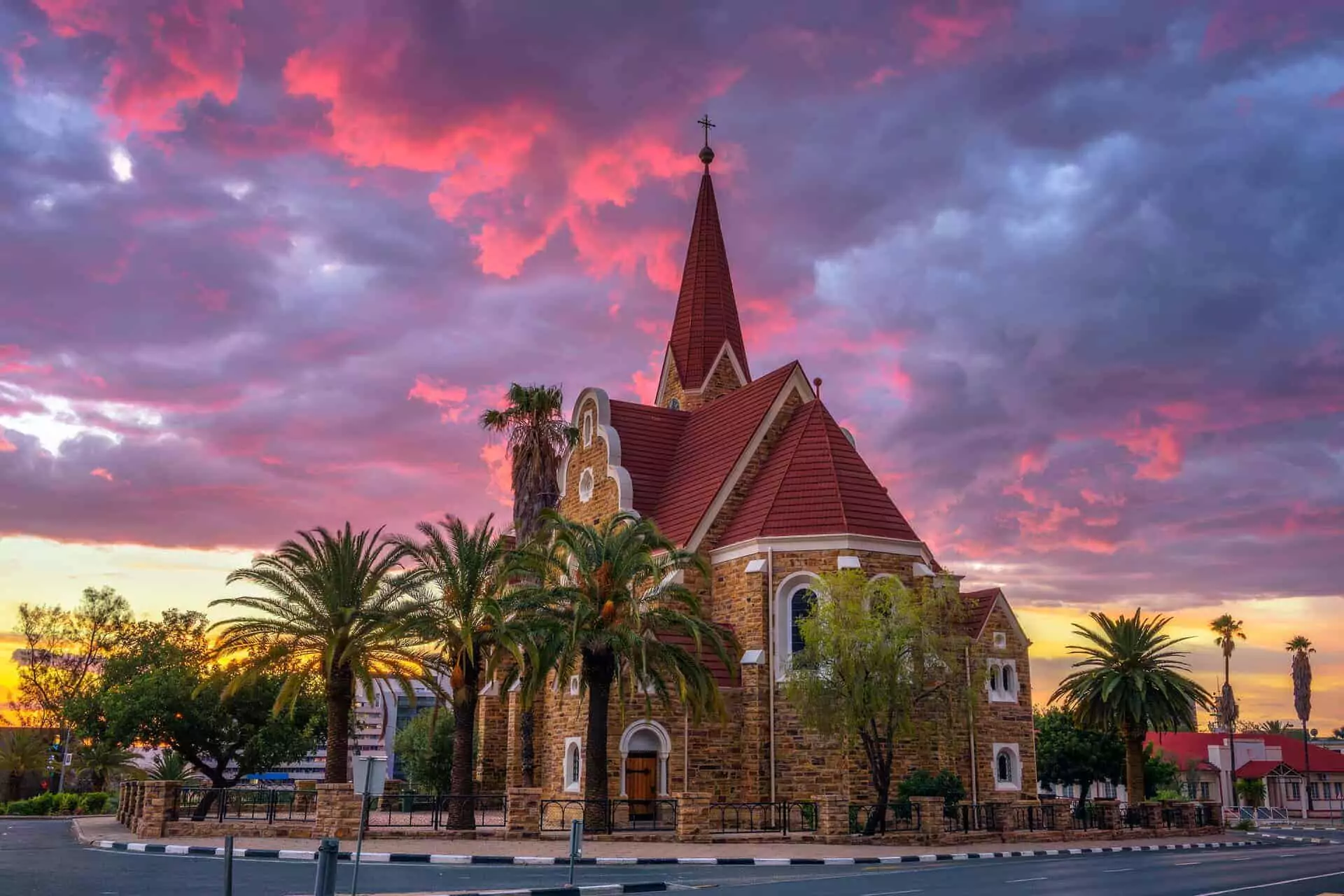
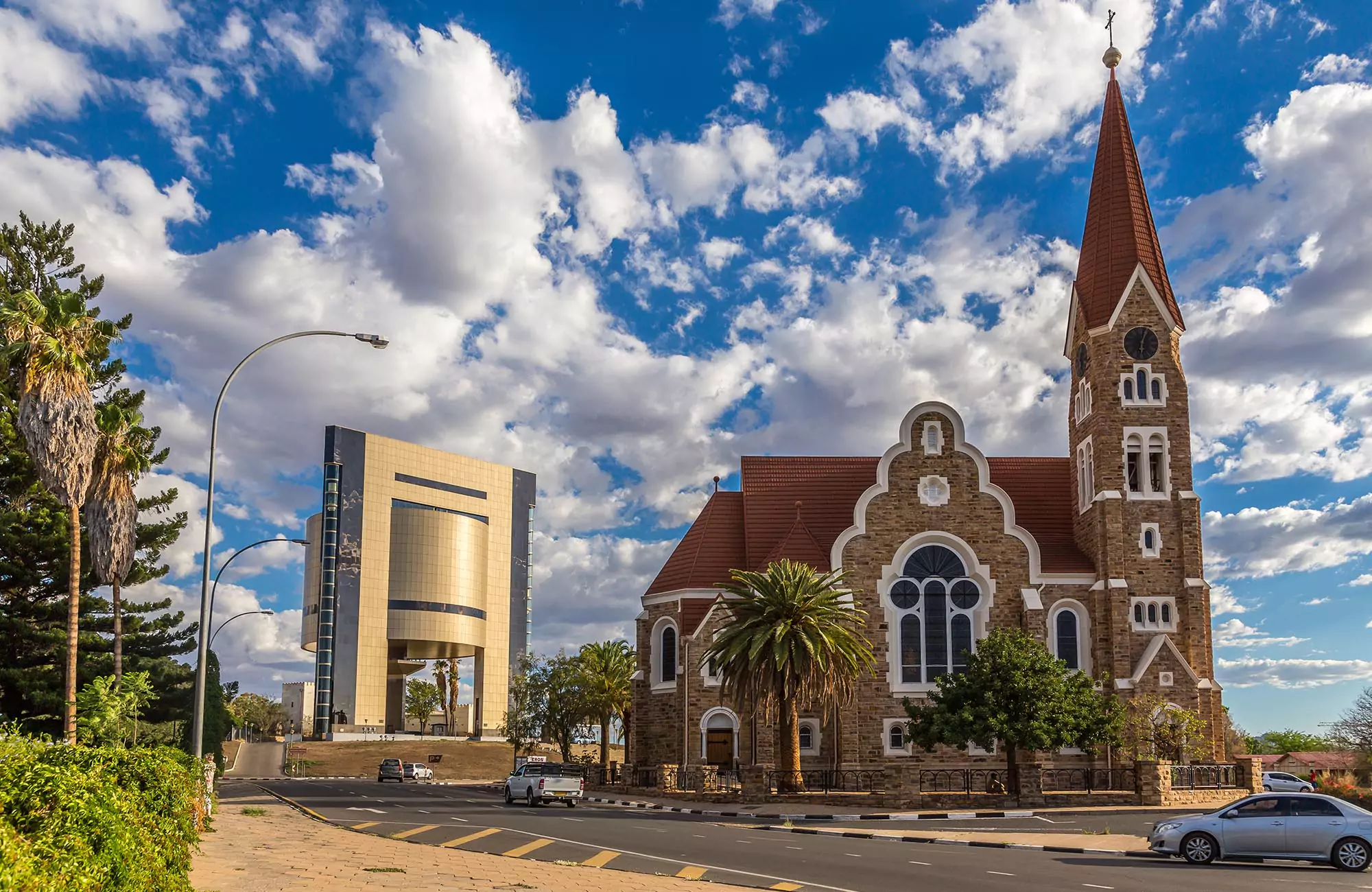
Christuskirche is far more than a building; it is a paramount historical and architectural emblem of Windhoek. Its striking silhouette, a harmonious blend of local sandstone and a distinctive 42-meter spire, is an unofficial symbol of the city, deeply embedded in the nation's complex narrative.
This "living monument" serves a dual role: it is both an active place of Evangelical Lutheran worship and one of Namibia's most photographed tourist attractions. This juxtaposition creates a dynamic space where sacred reverence meets public fascination, at the very heart of the capital's historic center.
At a Glance
Key facts that define this architectural and historical masterpiece.
1910
Year of Consecration
42 Meters
Overall Tower Height
Eclectic Style
Art Nouveau, Neo-Romanesque, & Gothic Revival
National Monument
Proclaimed in 1974
A Legacy in Stone
From a "Church of Peace" to a national monument, the history of Christuskirche is a compelling narrative of conflict, ambition, and enduring faith, deeply interwoven with the story of Namibia itself.
1
Conception & Delays (1896-1907)
The congregation was founded in 1896, but the Herero and Nama uprisings delayed construction. The church was later reconceived as a "Church of Peace" following these wars.
2
Construction & Consecration (1907-1910)
Under architect Gottlieb Redecker, construction began in 1907. The church was officially consecrated on October 16, 1910.
3
National Monument (1974)
In recognition of its profound historical and architectural value, Christuskirche was officially proclaimed a national monument on November 29, 1974.
4
Meticulous Restoration (1999)
A visiting expert discovered the famous stained-glass windows were installed inside-out. A two-year project began in 1999 to painstakingly correct this 90-year-old error.
Architectural Majesty
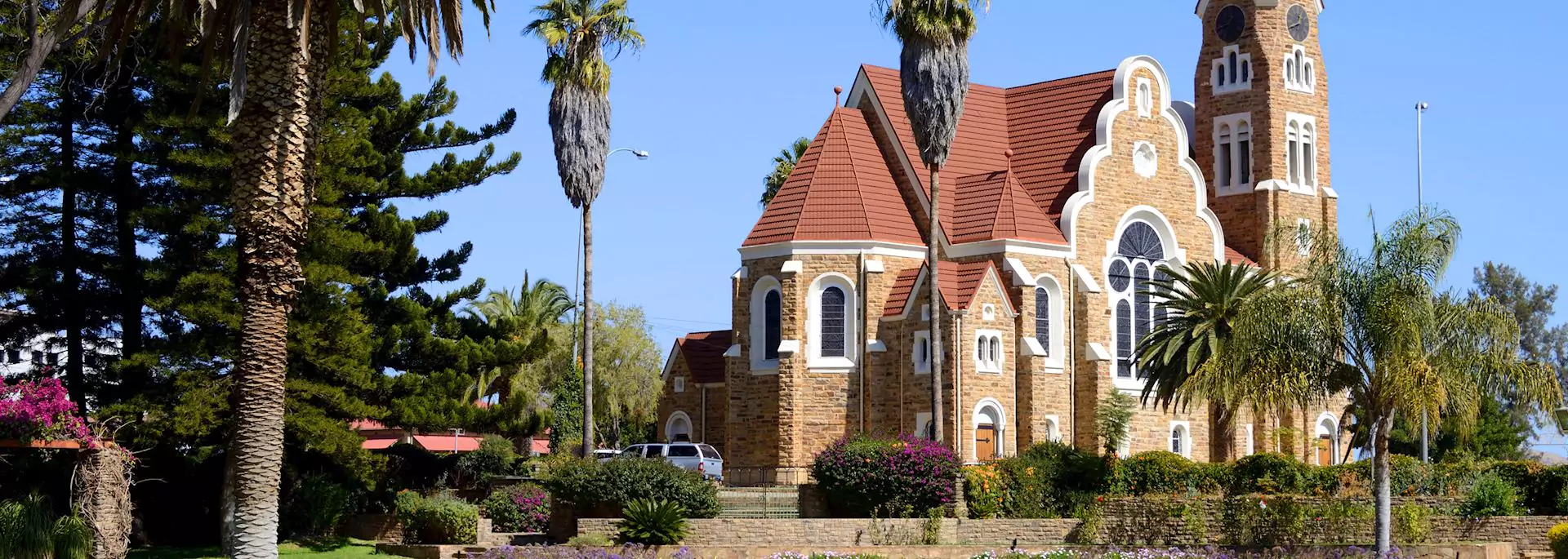
Christuskirche is a masterful symphony of styles, where European grandeur meets Namibian earth. Architect Gottlieb Redecker's design is a celebrated fusion of Neo-Romanesque, Gothic Revival, and Art Nouveau influences.
Gothic Revival Spire
The church's most defining feature is its slender spire, part of a 42-meter-high tower. This classic Gothic element establishes its vertical dominance over the city skyline.
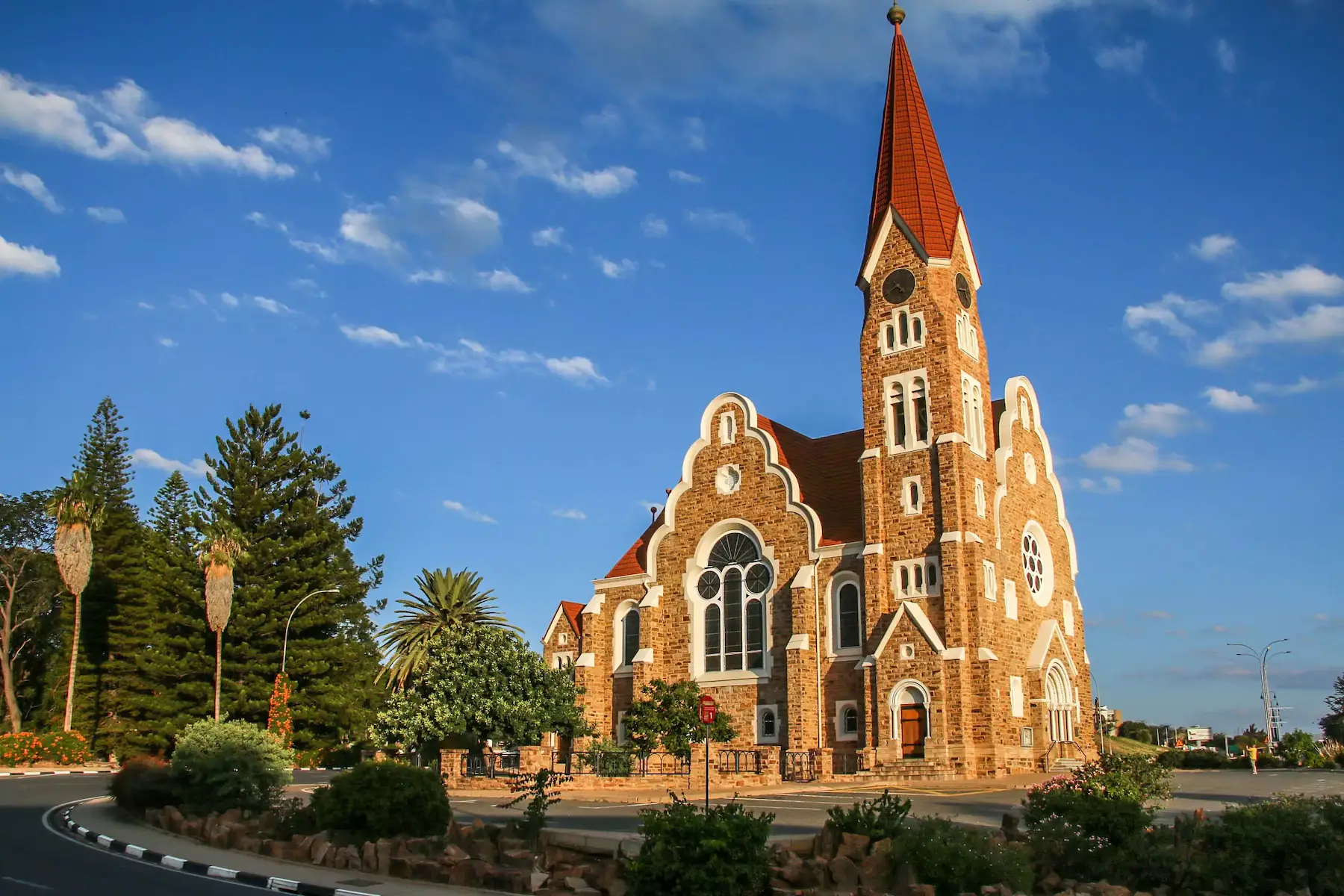
Namibian Sandstone
The walls are built from local quartz sandstone quarried near Avis Dam, its warm tones grounding the monumental structure firmly in the Namibian landscape.
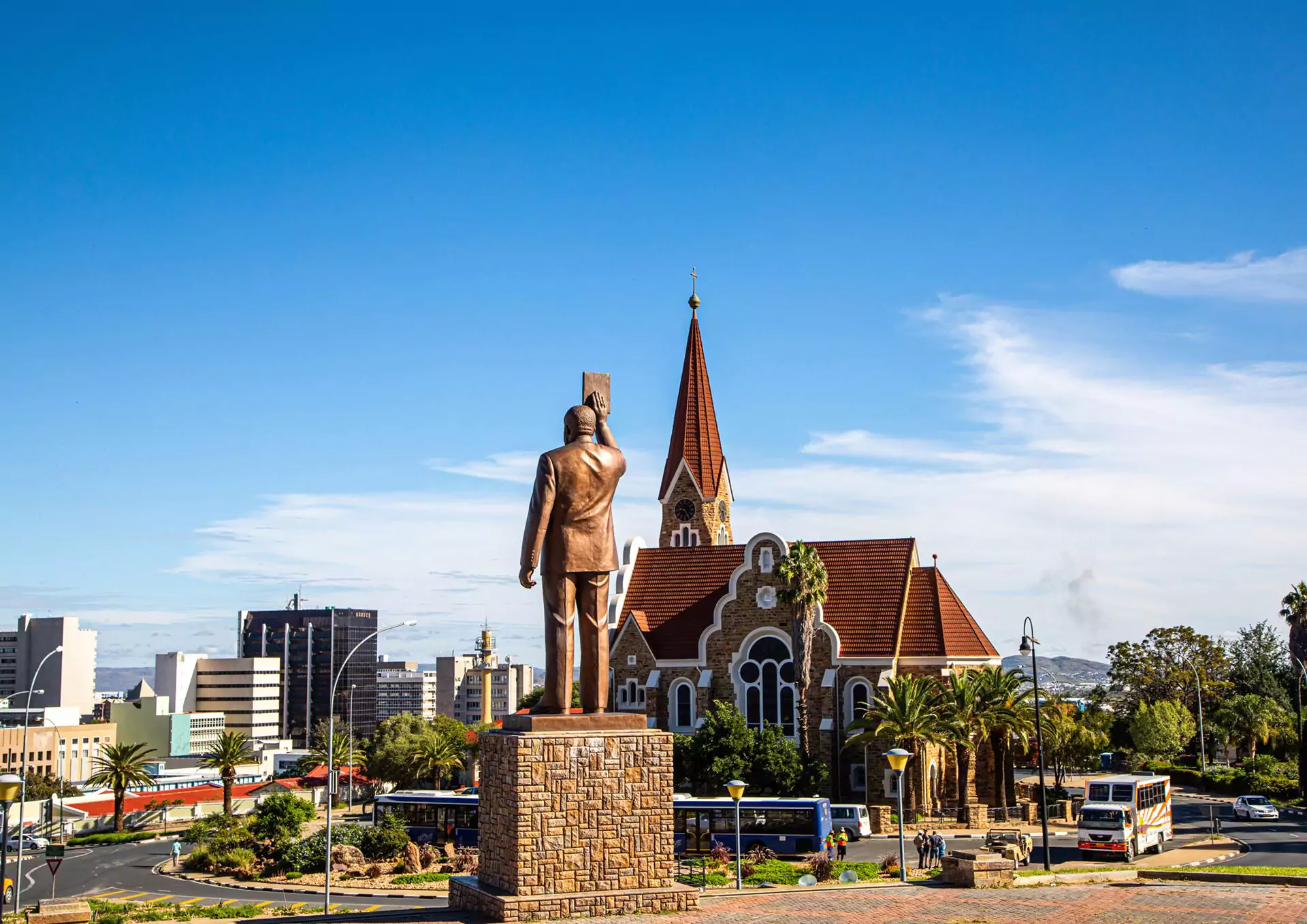
Art Nouveau Flourishes
The influence of Art Nouveau is visible in the staggered arched gables and stylized motifs, adding a touch of elegance and turn-of-the-century artistic flair.
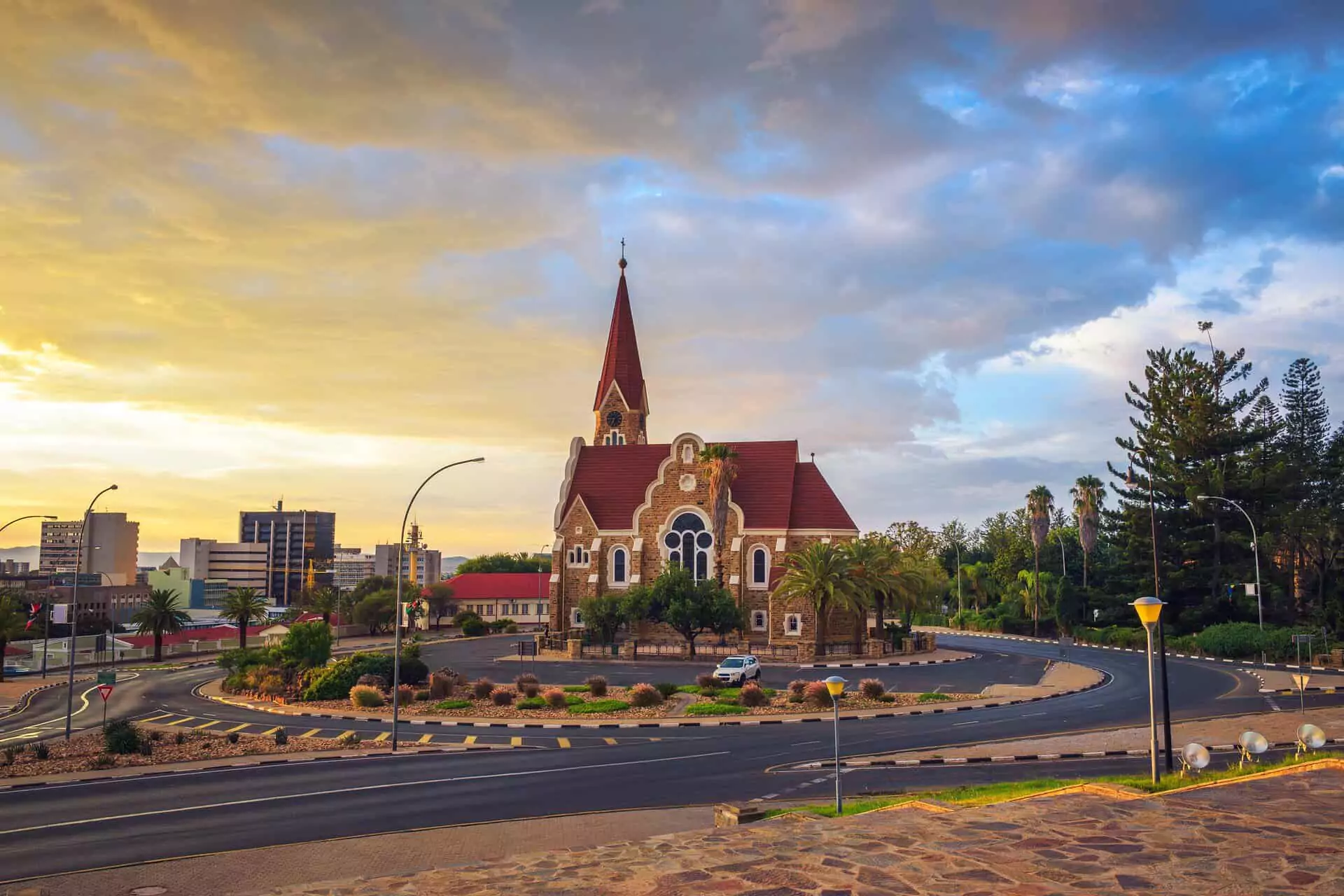
Sacred Artistry
The interior of Christuskirche houses treasures of profound artistic and historical significance, each piece telling a part of its unique story.
- Imperial Stained Glass: Three exquisite stained-glass windows, a personal gift from German Emperor Kaiser Wilhelm II, illuminate the sanctuary with biblical scenes.
- The Bronze Bells: Cast by Franz Schilling in Germany, three large bronze bells ring out with inscriptions: "Glory to God in the highest," "And on earth peace," and "Goodwill towards men".
- The Altar & Bible: The altar features Carrara marble imported from Italy, while the ornate altar bible was a donation from German Empress Auguste Viktoria.
Experience the Serenity
We welcome you to experience the peace and beauty of Christuskirche. Here is the information you need to plan your visit.
Worship Services
Join our congregation for worship. The primary service is held in German, a tradition connecting to the church's origins.
Sundays at 10:00 AM
Our Location
Find us proudly on Robert Mugabe Avenue, at the intersection with Fidel Castro Street.
+264 61 236 002
Pro Tip for Visitors
To ensure you can see the magnificent interior, we recommend checking locally for current opening hours before your visit, as they can vary.
A Visual Journey
Immerse yourself in the visual splendor of Christuskirche, a landmark celebrated as a "photographer's delight" and one of Windhoek's most photogenic buildings.
